Something changed in Meta ads, and most advertisers felt it before they could name it.
Ads that used to win stopped spending. Tight, tidy accounts started losing to accounts that looked messy. Targeting tricks that worked for years quietly stopped mattering.
The change has a name. It's called Andromeda.
The short version
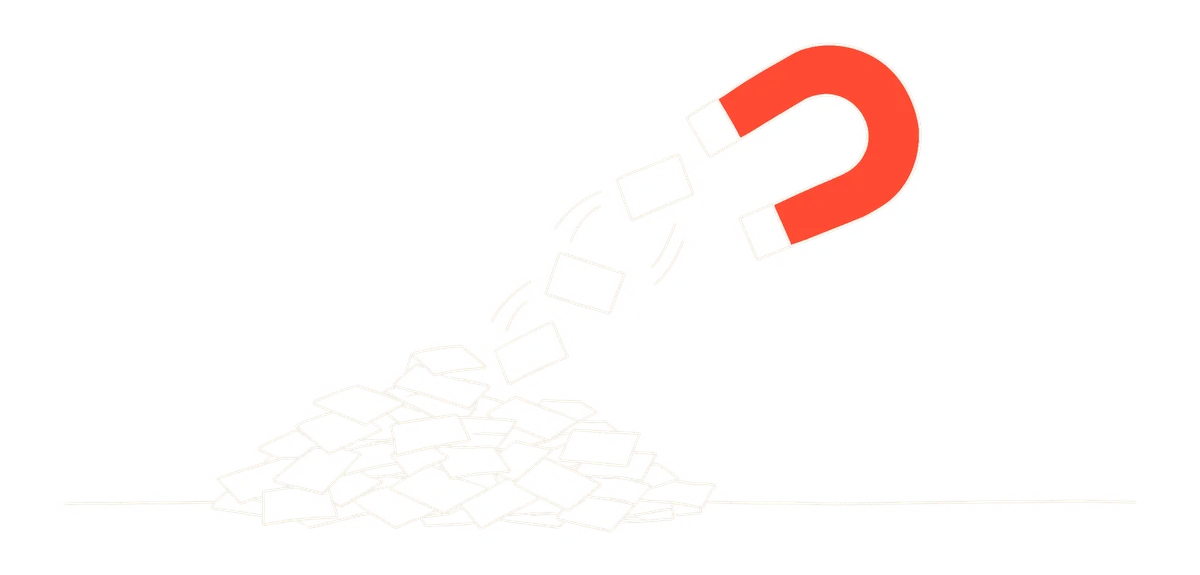
Andromeda is the system Meta uses to pick a shortlist of ads for each person, before any ad is ranked or bid on.
Meta announced it in December 2024. Every time someone opens Facebook or Instagram, there are tens of millions of ads that could be shown. Andromeda narrows that down to a few thousand. Only then do the bigger ranking models and the auction pick a winner.
Ad delivery = shortlist (Andromeda) → ranking → auction
If your ad doesn't make the shortlist, it never gets to compete. No bid, budget or setting fixes that.
What actually changed
The shortlist step used to be the simple part of the system. It had to be fast, so it couldn't be very smart.
Andromeda made it smart. Meta says it allowed a 10,000x increase in the complexity of the models that do this step, and reported an 8% lift in ads quality on selected segments. Those are Meta's numbers, not mine. The direction is what matters.
Here's the thing. A smarter shortlist doesn't lean on the audience you picked. It looks at the ad itself: what's in it, who it seems to be for, and who has responded to ads like it. Then it matches the ad to people.
The shortlist is now picked by a model that understands your ad, not just your targeting settings.
Your creative is the targeting now
The old model: you picked the audience, and Meta showed your ad to them.
The new model: you go broad, and the ad picks the audience.
Say you sell a skincare serum. You run three ads:
- A dermatologist explaining the ingredients.
- A tired parent showing a 30-second morning routine.
- A side-by-side of skin after eight weeks.
Those three ads reach three different groups of people, without you defining any of them. The ingredient nerd, the busy parent and the skeptic each get the ad that speaks to them.
Now run ten versions of the dermatologist ad with different background colors. You haven't reached more people. You've entered the same ticket ten times.
Concept count
This is why I stopped counting ads and started counting concepts.
I call it concept count: the number of genuinely different ideas live in an account. Not the number of ads uploaded.
Concept count = ads that would reach a different person
The test is simple. If you'd describe two ads with the same sentence, they're one concept.
Different concepts change at least one of these:
- The angle. The problem, desire or objection the ad is about.
- The person. Who it's speaking to, and who's speaking.
- The format. Talking head, product demo, static, founder story, customer review.
Iterations keep the concept and change the details: a new hook, a new first frame, a new headline. They're useful. They just don't raise your concept count.
An account with 40 ads and 3 concepts is a 3-concept account.
What Meta has actually said
Meta hasn't published a magic number. In a March 2025 post it described Andromeda as the engine that picks the right creative for each person as advertisers upload more creatives to diversify.
In other words: Meta's own advice is creative diversification.
Be careful with anything more precise than that. You'll read posts claiming a "similarity score" that gets ads suppressed, or an exact number of ads you need per ad set. I haven't found Meta documentation for any of it. Treat it as theory to test, not a rule.
Signs you're short on concepts
You rarely see "not enough concepts" written anywhere in Ads Manager. You see the symptoms.
- Spend piles onto one or two ads. Everything else in the ad set gets crumbs.
- New ads barely spend. They launch, get a few hundred impressions, and stall.
- Frequency climbs while reach flattens. The same people keep seeing the same idea.
- Results swing when one ad tires. The whole account rises and falls with a single winner.
Each one points to the same fix. The account needs more ideas, not more budget.
The best sources for new concepts are usually already in the business: customer reviews, comments under your ads, questions from sales calls, and the objections people raise before they buy. Each one is an angle waiting for an ad. A good creative brief turns one into a concept in about ten minutes.
When results get stuck, look at the concept count before you touch the budget.
How I set up accounts now
1. Consolidate. Fewer campaigns and fewer ad sets. Each one gets more data, and Andromeda gets a bigger pool of creative to match from.
2. Go broad. Let the ad find the people. Narrow targeting shrinks the pool of people your concepts can be matched to.
3. Feed concepts, not copies. New concepts go into the account on a schedule, every week. That's the core of why most accounts have a creative volume problem, and Andromeda made it more true, not less.
4. Iterate on what wins. When a concept works, test new hooks on it before you replace it. Hook rate tells you which openings are doing the work.
5. Judge concepts, not single ads. If one version of a concept fails, the concept might still be good. If every version fails, kill the concept. My kill rules are built around that.
6. Mix formats. Statics, short video, longer video, vertical and square. Different formats reach different people too.
What not to do
- Don't upload 30 near-copies and call it testing.
- Don't re-narrow your targeting to regain control. You're fighting the system that decides who sees what.
- Don't judge after one day. New concepts need impressions before the system knows who they're for.
- Don't chase rumored numbers. Test them in your own account first.
Pool rule 002Creative is the targeting.
Quick answers
What is Meta Andromeda? The retrieval system that picks a shortlist of a few thousand ads per person, out of tens of millions, before ranking and the auction. Meta announced it in December 2024.
Is there a setting to turn Andromeda on? No. It runs inside Meta's ad system. What changes is what you feed it.
How many creatives do I need? Meta hasn't given a number. Aim for several genuinely different concepts live in every ad set, with new ones arriving before the old ones tire out.
Is interest targeting dead? It still exists. But on broad delivery, the creative now does most of the work of deciding who sees the ad.
Does Andromeda affect Advantage+ campaigns? Yes. Meta built it to support Advantage+ automation and the growing volume of creative from generative AI tools.
The one-line version
Meta now picks the people from the ad. Give it more different ads, not more copies of the same one.